Before it was code, Nyeera was a word.
When naming the project, we set out to pay homage to the indigenous people of Brazil. That search led to a Guarani (a large Indigenous people native to South America) figure whose role — transmitting, guarding and healing through the word — has crossed centuries and still says something about what it means to pass on knowledge.
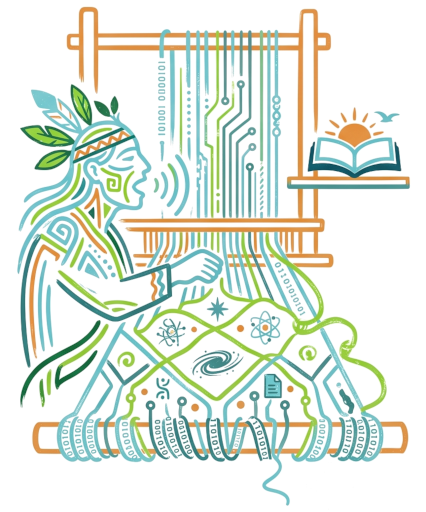
Inspired by the Guarani ñe'ẽra
"Nyeera" is an adaptation of the Guarani term ñe'ẽra, found while thinking about how to name the project — a way to honor the indigenous people of Brazil and, at the same time, find a figure whose role came close to what this project tries to do: pass on knowledge.
In Guarani cosmology, the word is not merely sound — it is considered part of a person's spiritual essence. Within that logic, the ñe'ẽra occupies a role close to that of the one who carries and passes on that word across generations.
Two functions, one thread running through them: the word
The research behind the project's name found two mutually sustaining dimensions in this role — leading through persuasion, and guarding collective memory.
Ñe'ẽ Porã — the beautiful words
In Pierre Clastres's anthropological reading of Amerindian societies, power isn't sustained by physical coercion or military force. It's sustained by rhetoric and persuasion.
The leader has to carry the "beautiful words" — able to advise, keep the peace and build consensus, without imposing their will in an authoritarian way.
Chants, ritual and tradition
Through sacred chants, origin narratives and rituals held in the house of prayer — the Opy or Óga Pysy — these guardians preserve the group's collective memory.
It is also through this path that new generations are taught respect for the land, social rules, and mythical prophecies such as the search for Yvy Marã E'ỹ, the Land Without Evil.
An ancient wisdom, read with new tools
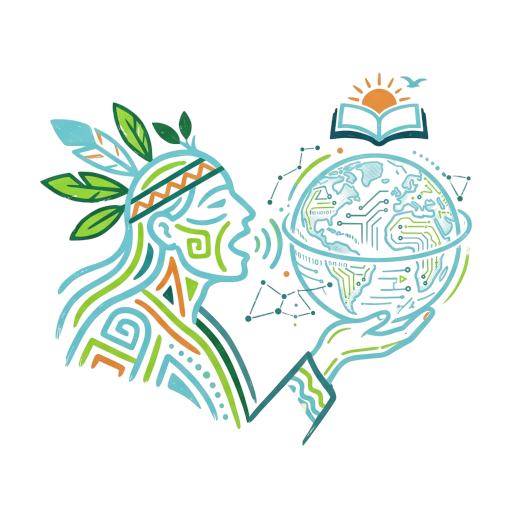
The name is homage — but it's also a work program. Nyeera proposes reading this ancestral function of transmitting the word alongside three fields that each study, in their own way, how knowledge is formed and passed on.
-
01
Cognitive science
How the human mind builds, organizes and retrieves knowledge — a direct inspiration for how a RAG pipeline structures memory and context.
-
02
Philosophy of communication
What makes a word persuasive, clear, or capable of generating consensus — the same problem the ñe'ẽra faced when advising without imposing.
-
03
Psychology
How trust, authority and rapport affect the way a message is received — relevant both to a Guarani leader and to an AI assistant.
A name borrowed from the word that teaches.
From leadership through persuasion to memory preserved in chants, the ñe'ẽra lent the project more than a name — it lent a way of thinking about what it means to pass on knowledge.